

Sleep Training Your 8 Month Old
8 months is a prime age to sleep train. Get a plan made for your baby.
Your 8 month old's plan starts with you. Select your age:


Why 8 Months Is the Perfect Time
Your baby is finally ready (but needs the right approach)
At 8 months, your baby has reached critical developmental milestones that make sleep training both necessary and highly effective. Object permanence has emerged - they now understand you exist even when you leave the room, which triggers separation anxiety but also means they can learn you'll return. Add in new physical skills like crawling, sitting up, and pulling to stand, and you've got a baby who's practicing moves in their crib at 2 AM. These developments disrupt sleep temporarily but signal your baby is ready for independent sleep skills. Betteroo creates a plan that works WITH these changes: separation anxiety handled with compassion, new-skill practice managed at bedtime, methods adapted to your baby and your environment. Most families see real change within two weeks, for $1 a day, with a 30-day money-back guarantee.

Award-Winning Program

Proud Winner
Parents' Picks Awards 2026
Best Baby & Toddler Products
“Most parenting products are built around the baby. Betteroo was built for the parent.”

Proud Winner
Family Choice Awards 2026
Winner
“Recognized for putting the parent, not just the baby, at the center of sleep support.”

Proud Winner
Parents' Picks Awards 2026
Best Preschool Products
“Plans adapt in real time when life disrupts them, instead of expecting exhausted parents to comply with a static program.”
Proud Winner
Parents' Picks Awards 2026
Best Mom Products
“Betteroo isn't just helping babies sleep, it's helping parents feel seen.”
Backed by experts, Based on science, Loved by parents.

Based on research and data from these leading organizations
As Featured In




Why 8-Month-Olds Thrive with Gentle, Responsive Sleep Training
What makes 8 months ideal for sleep training?
Your baby has reached the perfect intersection of capability and need. They understand cause and effect, can self-soothe with practice, have developed object permanence (you exist even when not visible), can go longer stretches without feeding, and have mature enough sleep cycles to link them together. Most 8-month-olds can sleep 9-12 hours overnight with proper support.
How do I handle separation anxiety during sleep training?
Separation anxiety peaks between 8-10 months - right when you're sleep training. This is actually a sign of healthy attachment! During the day, play peek-a-boo games to reinforce that you always return. Create a consistent, calming bedtime routine (20-30 minutes). Use a lovey or comfort object with your scent. Start with graduated approaches that provide reassurance. Consider the Chair Method if anxiety is severe - you stay present while teaching independence.
Which gentle methods work best at 8 months?
Pick-Up/Put-Down offers maximum comfort - you respond to crying by picking up until calm, then putting down awake. Takes patience but minimizes distress. The Chair Method keeps you in the room, gradually moving farther away over 1-2 weeks. Fading/Gradual Withdrawal slowly reduces your involvement each night. Check and Console provides timed reassurance without picking up. Choose based on your baby's temperament: sensitive babies do better with more presence, strong-willed babies need clearer boundaries.
What about those new physical skills disrupting sleep?
Your 8-month-old is obsessed with crawling, standing, and exploring - even at 3 AM! Practice new skills extensively during the day to reduce nighttime practice. When they stand in the crib, lay them down once, then let them figure it out. Create a boring response to nighttime acrobatics. Most babies stop the midnight gym sessions within a week once novelty wears off.
How do I adapt for my environment?
Real life isn't a quiet, perfect nursery. For noisy environments, use white noise consistently, consider blackout curtains with sound dampening, and start sleep training on quieter nights if possible. For hot climates, dress baby lighter (diaper only if needed), use breathable sleep sacks, and ensure good air circulation. For room sharing, use a visual barrier like a curtain, be boring during night interactions, and consider starting on a weekend when schedule flexibility helps.
How long will it realistically take?
At 8 months with gentle methods, expect noticeable improvement in 3-5 nights, significant progress by night 7-10, and consistent success within 2-3 weeks. Progress isn't always linear - expect some regression when new teeth arrive or skills emerge. Consistency is more important than perfection. Track progress with a sleep log to see patterns and celebrate small wins.
Who we are
We're on a mission to help parents and babies sleep better.

Rachel Rothman
Renowned parenting expert who blends science, empathy and real-world experience as a mom of three


Dr. Magdalena M. Oledzka, PT, PhD, DPT, MBA, PCS, c/NDT
Board-Certified Clinical Specialist in Pediatric Physical Therapy with 25+ years of experience. Clinical Lead at the Hospital for Special Surgery Pediatric Rehabilitation and Young Athlete Center.

Dr. Meidad Greenberg, MD
Board-certified pediatrician and pediatric nephrologist. Fellowship-trained at Albert Einstein College of Medicine and Children’s Hospital at Montefiore. Award-winning medical educator and father of three.

Ellen Reisel
Developmental psychologist with decades of experience working with children and parents and multidisciplinary teams.

Jennifer Jaye, LCSW
For more than 15 years, Jennifer has helped children and families better understand developmental and sensory differences.

Marci Silver, MS, CCC-SLP
NY, CA and CT-certified speech-language and feeding pathologist. Trained in PROMPT, TalkTools, SOS feeding and myofunctional therapy, with clinical experience at the Hospital for Special Surgery.
How It Works
Take Quiz
Understand Your 8 Month Old's Sleep (and How You're Surviving)
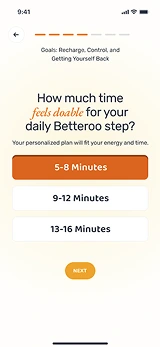
Our 3-minute quiz covers your baby's patterns AND how you're doing - then builds your plan based on both realities. Your baby's needs + your capacity = realistic solutions.
Get your custom plan
Get Personalized Plan
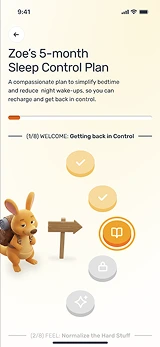
Custom Plan Built for You and Your Baby
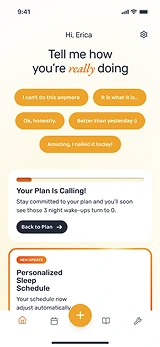
Your plan addresses what's happening now: crawling, teething, separation anxiety, multiple regressions. And when your baby shifts? Your plan shifts too. Life is chaotic at 8 months. Your plan accounts for that.
Get Yourself Back
Only Sleep Plan that Stays With You
Sleep tools, expert guidance, and daily support - for your baby's sleep AND your recovery. When you're depleted, we adjust. When life's chaotic, we simplify. When you need us, we're here. Baby sleeps. You recover. That's the point.
4.8 based on 24,129 reviews
Relatable content
4.6
Practical application
4.5
Extra resources
4.8
Easy to use
4.7
Course variety
4.8
Thousands are getting their sleep back
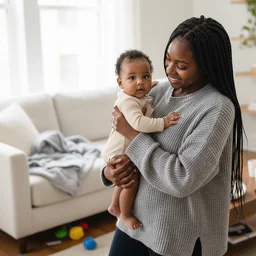
Our 8-month-old had serious separation anxiety and would scream the moment we left. The Chair Method Betteroo recommended was perfect, we stayed close while she learned to self-soothe. Two weeks later, she's sleeping 11 hours straight!
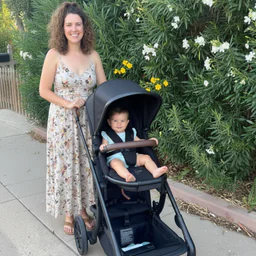
Living in a noisy apartment, we thought sleep training was impossible. The app helped us adapt methods for our environment. White noise, strategic timing, and the fading method worked despite neighbors. Our son went from 5 wakings to sleeping through!
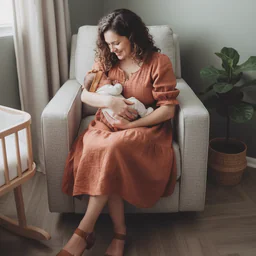
Our daughter kept standing in her crib all night practicing her new skill. The plan helped us handle this without creating bad habits. We practiced during the day, stayed boring at night, and within a week she was sleeping peacefully again.

After trying everything for our sensitive 8-month-old, Betteroo's pick-up/put-down variation finally worked. Yes, it took patience, but no harsh crying. Three weeks later, our whole family is finally sleeping. Worth every minute of effort!
No more...
Expensive sleep consultants
Endless night wakings
Feeling trapped by sleep
Exhaustion affecting your family
Feeling overwhelmed and alone
3 AM crib gymnastics sessions
8-Month Sleep Success
24,129
Happy families
90%
See improvement in 1 week
4.8★
Average rating
Your 8-Month Sleep Training Questions, Answered
We know sleep can feel overwhelming. Here are answers to the questions we hear most from parents just like you.
Eight months is often considered ideal for sleep training. Your baby has developed object permanence (understanding you exist even when not visible), can self-soothe with practice, can go longer without feeding, and has mature sleep cycles. While some families succeed earlier or later, 8 months offers the perfect blend of capability and receptiveness. Most babies this age can learn independent sleep skills within 1-3 weeks with consistent, gentle approaches.
Many parents notice positive changes within the first 3-5 days, though every baby's timeline is unique. The key is consistency with your personalized plan. Betteroo adapts as you go, celebrating small wins and adjusting when needed. Remember, sustainable sleep changes take time - we'll get there together.
The best method depends on your baby's temperament and your comfort level. For sensitive babies or severe separation anxiety, try the Chair Method where you stay present. For babies who get more stimulated by your presence, Check and Console works better. Pick-Up/Put-Down is ideal if you want maximum responsiveness. Fading suits families who prefer gradual change. Most 8-month-olds respond well to any consistent approach, choose what feels sustainable for your family.
Separation anxiety peaks at 8-10 months, making sleep training feel harder but not impossible. Build confidence during daytime with short separations and peek-a-boo games. Extend your bedtime routine to 20-30 minutes for extra connection. Use a transitional object with your scent. Start with methods that allow your presence (Chair Method) if anxiety is severe. Remember, learning you always return actually helps reduce separation anxiety over time.
Your baby just learned to pull up and can't resist practicing, even at 3 AM! This is temporary. During the day, practice 'up and down' games extensively. At night, lay them down once calmly, then let them figure it out themselves. Don't turn it into a game by repeatedly laying them down. Stay boring and uninteresting. Most babies stop the nighttime acrobatics within 5-7 nights once the novelty wears off.
Yes! Room sharing requires some adaptations but doesn't prevent sleep training. Create a visual barrier with a curtain or room divider. Use white noise to mask small movements. Be incredibly boring during night interactions, no eye contact, minimal talking. Consider starting on a weekend when you can nap if needed. The Check and Console or Chair Method often work well for room-sharing families since you're already nearby.
With gentle methods at 8 months, expect to see initial improvement within 3-5 nights, significant progress by night 7-10, and consistent success within 2-3 weeks. Some babies respond faster, others need more time. Factors affecting timeline include consistency, method chosen, temperament, and environmental factors. Remember, you're teaching a skill, like walking or talking, it takes practice and patience.
Many 8-month-olds can sleep 9-12 hours without feeding, but some still need one night feed, and that's okay! Sleep training means teaching independent sleep skills, not eliminating all night feeds. Feed if it's been 5+ hours and your baby seems hungry. Keep feeds boring and business-like. Put baby back awake after feeding. Gradually reduce feed length/amount when ready. Most naturally drop night feeds by 9-12 months.
Yes! Every baby can learn to sleep well with the right guidance. Betteroo creates a personalized sleep plan based on your baby's unique patterns, age, and temperament. Our approach combines proven sleep science with gentle, emotionally-attuned coaching that works with your parenting style, not against it. Thousands of parents have seen real improvements in as little as one week.
Betteroo goes beyond generic advice. We provide a truly personalized experience that adapts to your baby's sleep patterns in real-time, considers your parenting values, and offers emotional support for the tough moments. Plus, our expert-backed coaching feels like having a sleep consultant in your pocket, at a fraction of the cost.
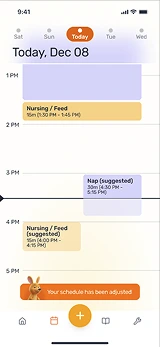
Betteroo is designed to adapt to your baby's changing needs, whether it's a growth spurt, teething, or a developmental leap. Our Smart Sleep Schedule adjusts in real-time, and we provide specific guidance for common challenges like sleep regressions, travel, and illness. You're never navigating these tough phases alone.
Not at all! Betteroo offers flexible approaches that align with your comfort level, from gentle, gradual methods to more structured techniques. You choose what feels right for your family, and we guide you through it step by step. There's no one-size-fits-all approach because every family is unique.
Yes! Betteroo works with your current sleep setup and feeding method. Whether you're breastfeeding, formula feeding, or combination feeding, and whether your baby sleeps in a crib, bassinet, or safely co-sleeps, we create a plan that fits your family's lifestyle while helping you reach your sleep goals.
Betteroo is designed for babies from newborn through toddler years. Our personalized plans adapt to your child's developmental stage, whether you're navigating newborn sleep patterns, the 4-month regression, or transitioning to one nap. We grow with your family's needs.
Noisy environments require strategic adaptations. - Use consistent white noise at 50-60 decibels to mask disruptions. - Add blackout curtains with sound-dampening properties. - Time sleep training start for quieter periods if possible. - Explain to neighbors if needed. - Consider the Fading method which involves less crying. Remember, babies can adapt to their environment, consistency matters more than perfect quiet.
Ready for Your 8-Month-Old to Master Sleep?
Get a plan for separation anxiety and new skills. $1 a day, with a 30-day guarantee. Start your free assessment now.
4.8 based on 24,129 reviews