

Sleep Training Your 7 Month Old
Prime time for sleep training. Get a gentle, personal plan.
Your 7 month old's plan starts with you. Select your age:


Why 7 Months Is Prime Time
The perfect balance of readiness and adaptability
At 7 months, your baby hits the sweet spot between developmental readiness and flexibility. Their circadian rhythm is mature, self-soothing abilities are emerging, and most can go 10 to 12 hours without feeding. Unlike younger babies who aren't quite ready, or older babies with stronger habits, 7-month-olds can adapt to new sleep patterns relatively quickly. But you might also be dealing with teething, sitting up, or early separation anxiety - all normal at this age. The key is choosing an approach that respects these challenges while still moving toward independent sleep. Betteroo creates a personalized plan based on YOUR comfort level and your baby's temperament, with gentle or faster approaches and daily support. About $1 a day, with a 30-day money-back guarantee.

Award-Winning Program

Proud Winner
Parents' Picks Awards 2026
Best Baby & Toddler Products
“Most parenting products are built around the baby. Betteroo was built for the parent.”

Proud Winner
Family Choice Awards 2026
Winner
“Recognized for putting the parent, not just the baby, at the center of sleep support.”

Proud Winner
Parents' Picks Awards 2026
Best Preschool Products
“Plans adapt in real time when life disrupts them, instead of expecting exhausted parents to comply with a static program.”
Proud Winner
Parents' Picks Awards 2026
Best Mom Products
“Betteroo isn't just helping babies sleep, it's helping parents feel seen.”
Backed by experts, Based on science, Loved by parents.

Based on research and data from these leading organizations
As Featured In




Why 7 Months Is a Prime Time for Gentle, Responsive Sleep Training
What makes 7 months ideal for sleep training?
Your baby has reached the perfect intersection of capability and adaptability. Their circadian rhythm is fully developed, producing melatonin naturally at bedtime. Sleep cycles have matured to 60-90 minutes, allowing for longer stretches. Most 7-month-olds can self-soothe with practice - thumb-sucking, playing with hair, or humming. Night feeds are often habit rather than hunger at this age. They understand routines and can anticipate bedtime. Yet they're still flexible enough to learn new patterns quickly, unlike older babies with entrenched habits.
Which method should I choose at 7 months?
Your choice depends on your tolerance for crying and desired timeline. For gentle approaches with minimal tears: Pick-Up/Put-Down offers maximum comfort, picking up when crying, putting down when calm (takes 2-3 weeks). Chair Method keeps you present while gradually increasing distance (1-2 weeks). Gradual Withdrawal slowly reduces your involvement each night (2-3 weeks). For faster results with some crying: Ferber/Check and Console uses timed check-ins with increasing intervals (3-7 nights). Controlled Crying allows brief periods of crying with regular checks (3-5 nights). Full extinction works fastest but requires confidence (3 nights typical).
How do I start sleep training my 7-month-old?
Success comes from preparation and consistency. First, ensure baby is healthy and over 14 pounds. Create a calming 20-30 minute bedtime routine (bath, book, song). Move feeding to the beginning of routine, not the end. Put baby down drowsy but awake - this is crucial. Start with bedtime, then tackle naps after 3-5 nights of success. Track progress with a sleep log to see patterns. Most families see improvement by night 3-5, solid success by night 7-10.
What about teething at 7 months?
Teething peaks around 6-8 months but shouldn't derail sleep training. True teething pain only lasts 1-3 nights per tooth - if sleep issues persist longer, it's likely habit, not pain. Give appropriate pain relief 30 minutes before bedtime if actively teething. Maintain your sleep training approach consistently. Offer extra comfort during the day but keep nights boring. Most babies adapt despite teething within a week. Remember, waiting for teething to end could mean waiting months!
How do I break the feeding-to-sleep association?
At 7 months, this is the most common sleep crutch. To break it, gradually separate feeding from sleep. Move the bedtime feed to the start of your routine, in a bright room. Add activities between feeding and sleep (book, diaper change). If baby falls asleep feeding, gently wake them before putting in crib. For night wakings, wait 5-10 minutes before responding - many self-settle. If you do feed at night, keep it boring and put baby back awake. Most associations break within 5-7 nights of consistency.
What are realistic expectations for 7-month sleep training?
Timeline varies by method and consistency. With gentle methods, expect initial protest for 20-40 minutes on night 1, gradual improvement nights 2-5, breakthrough around night 7, and consistent success by week 2-3. With faster methods, expect significant crying night 1 (30-60 minutes), dramatic improvement by night 3, and sleeping through by night 5-7. Naps typically take longer than nights. Setbacks are normal with illness or travel but skills return quickly with consistency.
Who we are
We're on a mission to help parents and babies sleep better.

Rachel Rothman
Renowned parenting expert who blends science, empathy and real-world experience as a mom of three


Dr. Magdalena M. Oledzka, PT, PhD, DPT, MBA, PCS, c/NDT
Board-Certified Clinical Specialist in Pediatric Physical Therapy with 25+ years of experience. Clinical Lead at the Hospital for Special Surgery Pediatric Rehabilitation and Young Athlete Center.

Dr. Meidad Greenberg, MD
Board-certified pediatrician and pediatric nephrologist. Fellowship-trained at Albert Einstein College of Medicine and Children’s Hospital at Montefiore. Award-winning medical educator and father of three.

Ellen Reisel
Developmental psychologist with decades of experience working with children and parents and multidisciplinary teams.

Jennifer Jaye, LCSW
For more than 15 years, Jennifer has helped children and families better understand developmental and sensory differences.

Marci Silver, MS, CCC-SLP
NY, CA and CT-certified speech-language and feeding pathologist. Trained in PROMPT, TalkTools, SOS feeding and myofunctional therapy, with clinical experience at the Hospital for Special Surgery.
How It Works
Take Quiz
Understand Your 7 Month Old's Sleep (and How You're Surviving)
Our 3-minute quiz covers your baby's patterns AND how you're doing - then builds your plan based on both realities. Your baby's needs + your capacity = realistic solutions.
Get your custom plan
Get Personalized Plan
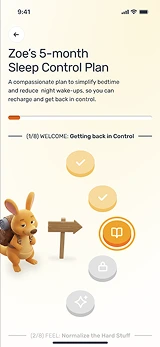
Custom Plan Built for You and Your Baby
Your plan addresses what's happening now: crawling, teething, separation anxiety, multiple regressions. And when your baby shifts? Your plan shifts too. Life is chaotic at 7 months. Your plan accounts for that.
Get Yourself Back
Only Sleep Plan that Stays With You
Sleep tools, expert guidance, and daily support - for your baby's sleep AND your recovery. When you're depleted, we adjust. When life's chaotic, we simplify. When you need us, we're here. Baby sleeps. You recover. That's the point.


4.8 based on 24,129 reviews
Relatable content
4.6
Practical application
4.5
Extra resources
4.8
Easy to use
4.7
Course variety
4.8
Thousands are getting their sleep back

At 7 months, our daughter was waking every 2 hours to nurse. The gradual withdrawal method Betteroo recommended was perfect for us. Within 2 weeks, she was sleeping 11 hours straight without any traumatic crying!
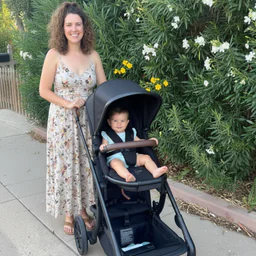
We were dealing with teething AND sleep training. The app helped us understand what was teething pain versus habit. Using Ferber method with teething accommodations, our son was sleeping through in just 5 nights!

The feeding-to-sleep association was killing us. At 7 months, we finally committed. The personalized plan broke it down into manageable steps. One week later, our daughter falls asleep independently every night!

We wanted the gentlest approach possible. Pick-up/put-down took patience, but our sensitive 7-month-old learned to self-soothe without distress. Three weeks of consistency paid off, he now loves his crib!
No more...
Expensive sleep consultants
Hourly wakeup all night
Trial and error with generic advice
Feeling overwhelmed and alone
Confusion about teething
Exhaustion affecting your family
Join thousands of happy parents
24,129
Happy families
90%
See improvement in 1 week
4.8★
Average rating
Your 7-Month Sleep Training Questions, Answered
Seven months brings unique opportunities and challenges. Here are science-backed answers to help you succeed.
Seven months is considered prime time for sleep training. Your baby has the neurological development needed for independent sleep, mature circadian rhythm, emerging self-soothing abilities, and understanding of routines. They're also still adaptable, unlike older babies with stronger habits. Most 7-month-olds can learn to sleep through the night within 1-2 weeks with consistent approach. Studies show no negative long-term effects, and both babies and parents sleep better after training.
Timeline depends on method and consistency. Gentle methods show initial improvement in 3-5 nights, breakthrough around night 7-10, and solid success by week 2-3. Faster methods (Ferber, extinction) typically work in 3-7 nights for nighttime sleep. Naps usually take 1-2 weeks longer than nights. Most 7-month-olds are sleeping through the night within 2 weeks of starting. Consistency is crucial - stopping and starting prolongs the process.
The best method depends on your parenting style and baby's temperament. For minimal crying, try Pick-Up/Put-Down or Chair Method (takes 2-3 weeks). For moderate crying with faster results, Ferber/Check and Console works well (3-7 nights). For fastest results, extinction works in 3-5 nights but involves more crying. All methods work at 7 months, consistency matters more than the specific approach. Choose what feels sustainable for YOUR family.
Teething peaks around 6-8 months but shouldn't stop sleep training. True teething pain only lasts 1-3 nights per tooth. If sleep issues persist longer, it's likely habit. Give pain relief 30 minutes before bedtime if actively teething. Maintain your sleep training approach - consistency is key. Offer extra daytime comfort but keep nights boring. Most babies learn to sleep despite teething. Waiting for teething to end could mean waiting months!
Absolutely! Seven months is perfect for breaking this association. Move feeding to the beginning of bedtime routine, not the end. Feed in a bright room with activity afterward. Always put baby down awake after the routine. For night wakings, wait 5-10 minutes before responding - many self-settle. If you feed at night, keep it boring and put baby back awake. This association typically breaks within 5-7 nights of consistency.
Crying varies by method and temperament. With gentle methods (Pick-Up/Put-Down), expect 10-30 minutes of fussing/light crying over 2-3 weeks. With Ferber, expect 20-45 minutes night 1, decreasing to under 10 minutes by night 3-5. With extinction, 30-60 minutes night 1 is common, but dramatic improvement by night 3. Any crying is hardest on night 1-2. By night 3-5, most babies cry less than 10 minutes. Remember, some protest is normal when changing habits.
Many 7-month-olds are learning to sit up or pull to stand, which can disrupt sleep training. During the day, practice these skills extensively. At bedtime, lay them down once calmly, then let them figure it out. Don't repeatedly lay them down - this becomes a game. Stay boring and unresponsive to the acrobatics. Most babies learn to lie themselves down within 3-5 nights. The novelty wears off quickly with a boring response.
Many 7-month-olds can go 10-12 hours without feeding, but it's not required for sleep training. You can sleep train while maintaining 1-2 feeds if desired. To night wean gradually, reduce nursing time by 1-2 minutes per night or decrease bottle amount by 1 oz every 2 nights. Or go cold turkey if baby is thriving and pediatrician approves. If keeping night feeds, put baby back awake afterward. Most naturally drop night feeds once they learn independent sleep skills.
Yes! Every baby can learn to sleep well with the right guidance. Betteroo creates a personalized sleep plan based on your baby's unique patterns, age, and temperament. Our approach combines proven sleep science with gentle, emotionally-attuned coaching that works with your parenting style, not against it. Thousands of parents have seen real improvements in as little as one week.
Many parents notice positive changes within the first 3-5 days, though every baby's timeline is unique. The key is consistency with your personalized plan. Betteroo adapts as you go, celebrating small wins and adjusting when needed. Remember, sustainable sleep changes take time, but with the right support, you'll get there together.
Betteroo goes beyond generic advice. We provide a truly personalized experience that adapts to your baby's sleep patterns in real-time, considers your parenting values, and offers emotional support for the tough moments. Plus, our expert-backed coaching feels like having a sleep consultant in your pocket, at a fraction of the cost.
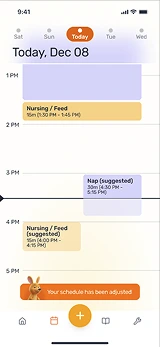
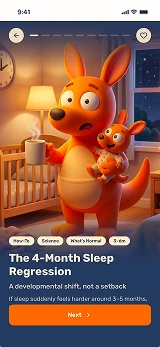
Betteroo is designed to adapt to your baby's changing needs, whether it's a growth spurt, teething, or a developmental leap. Our Smart Sleep Schedule adjusts in real-time, and we provide specific guidance for common challenges like sleep regressions, travel, and illness. You're never navigating these tough phases alone.
Not at all! Betteroo offers flexible approaches that align with your comfort level, from gentle, gradual methods to more structured techniques. You choose what feels right for your family, and we guide you through it step by step. There's no one-size-fits-all approach because every family is unique.
Yes! Betteroo works with your current sleep setup and feeding method. Whether you're breastfeeding, formula feeding, or combination feeding, and whether your baby sleeps in a crib, bassinet, or safely co-sleeps, we create a plan that fits your family's lifestyle while helping you reach your sleep goals.
Betteroo is designed for babies from newborn through toddler years. Our personalized plans adapt to your child's developmental stage, whether you're navigating newborn sleep patterns, the 4-month regression, or transitioning to one nap. We grow with your family's needs.

Your 7-Month-Old Is Ready. Let's Do This.
Take advantage of this prime sleep training window. Get your personalized plan and start tonight.
4.8 based on 24,129 reviews