

Sleep Training Your 6 Year Old
First grade exhaustion, midnight bed invasions, and bedtime battles you thought would be over by now. Get a gentle plan for your boundary-testing big kid.
Based on your age


Why 6 Year Olds Are Different
Old enough to argue. Young enough to need you. Stuck in the middle.
Six-year-olds occupy a frustrating middle ground. They're old enough to argue back, panic when you leave, and remember every time you've ever made an exception. But they're still young enough to genuinely need reassurance, struggle with big fears, and have trouble self-regulating after long school days. First grade has changed the equation. Full days of academics, social hierarchies, and performance pressure, with no nap and earlier wake times. They come home exhausted but wired, and bedtime becomes the dumping ground for every worry they couldn't express all day. Night terrors peak around ages 5-7. Fear of the dark peaks around 6-9. School anxiety is at an all-time high. And many parents are shocked to discover that sleep problems didn't magically resolve when their child started school, they often got worse. Betteroo's plans are designed for this exact moment, when baby sleep training methods don't apply, but you also can't keep being held hostage every night.

Award-Winning Program

Proud Winner
Parents' Picks Awards 2026
Best Baby & Toddler Products
“Most parenting products are built around the baby. Betteroo was built for the parent.”

Proud Winner
Family Choice Awards 2026
Winner
“Recognized for putting the parent, not just the baby, at the center of sleep support.”

Proud Winner
Parents' Picks Awards 2026
Best Preschool Products
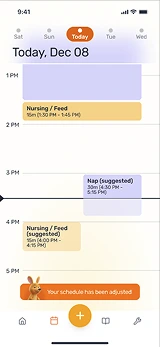
“Plans adapt in real time when life disrupts them, instead of expecting exhausted parents to comply with a static program.”
Proud Winner
Parents' Picks Awards 2026
Best Mom Products
“Betteroo isn't just helping babies sleep, it's helping parents feel seen.”
Backed by experts, Based on science, Loved by parents.

Based on research and data from these leading organizations
As Featured In




The Science Behind Your 6 Year Old's Sleep
At 6, your child needs 9-12 hours of total sleep, almost always entirely at night. Naps are a thing of the past for most kids this age. Their sleep cycles are now fully adult-like, cycling through deep and REM sleep in 90-minute patterns.
But emotional regulation is still developing. School brings new pressures: reading expectations, social dynamics, teacher approval, fear of "getting in trouble." These worries surface at bedtime, often the first quiet moment since morning. Add in peak-age fears (dark, being alone, imaginary threats) and overtiredness from long days, and you get a perfect storm.
The research is clear: insufficient sleep at this age directly impacts attention, impulse control, emotional regulation, and school performance. Protecting your 6-year-old's sleep isn't just about peaceful nights, it's about setting them up to succeed during the day.
Who we are
We're on a mission to help parents and babies sleep better.

Rachel Rothman
Renowned parenting expert who blends science, empathy and real-world experience as a mom of three


Dr. Magdalena M. Oledzka, PT, PhD, DPT, MBA, PCS, c/NDT
Board-Certified Clinical Specialist in Pediatric Physical Therapy with 25+ years of experience. Clinical Lead at the Hospital for Special Surgery Pediatric Rehabilitation and Young Athlete Center.

Dr. Meidad Greenberg, MD
Board-certified pediatrician and pediatric nephrologist. Fellowship-trained at Albert Einstein College of Medicine and Children’s Hospital at Montefiore. Award-winning medical educator and father of three.

Ellen Reisel
Developmental psychologist with decades of experience working with children and parents and multidisciplinary teams.

Jennifer Jaye, LCSW
For more than 15 years, Jennifer has helped children and families better understand developmental and sensory differences.

Marci Silver, MS, CCC-SLP
NY, CA and CT-certified speech-language and feeding pathologist. Trained in PROMPT, TalkTools, SOS feeding and myofunctional therapy, with clinical experience at the Hospital for Special Surgery.
How It Works
Take Quiz
Understand Your 6 Year Old's Sleep (and How You're Holding Up)
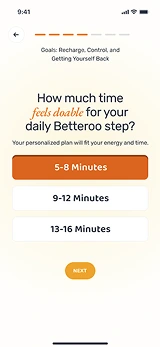
Our 3-minute assessment identifies whether you're dealing with bedtime battles, night wakings, early rising, school anxiety, fear of the dark, or the classic "sneaks into our bed at 2am" pattern. Every 6 year old is different.
Get your custom plan
Get Personalized Plan
Custom Plan Built for 6-Year-Old Challenges
Your plan includes specific strategies for this age, bedtime passes, reward systems that work for first graders, anxiety management techniques, and scripts for shutting down the endless "one more thing" requests without triggering meltdowns.
Get Yourself Back
Only Sleep Plan that Stays With You
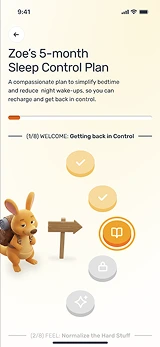
Our gentle approach sets firm boundaries while honoring your child's very real worries. Most families see significant improvement within 1-2 weeks. We stay with you through school transitions, extinction bursts, and the 2am bedroom invasions.

4.8 based on 24,129 reviews
Relatable content
4.6
Practical application
4.5
Extra resources
4.8
Easy to use
4.7
Course variety
4.8
Thousands are getting their sleep back
We honestly thought sleep problems would be over by first grade. Instead, they got worse, bedtime took an hour, she was in our bed by midnight every night, and mornings were a disaster. Betteroo gave us a plan that actually worked for a 6-year-old brain. Two weeks later, she stays in her own bed all night.
My son had every excuse in the book plus genuine anxiety about school. The combination was exhausting, we couldn't tell what was stalling and what was real fear. Betteroo helped us address both. The bedtime pass technique stopped the curtain calls, and the anxiety strategies helped him actually feel safe.
Sticker charts stopped working years ago. Consequences just made bedtime worse. We were stuck in this awful pattern of him needing us to stay until he fell asleep, then waking at 2am wanting us again. Betteroo's gradual approach got us out without the screaming extinction burst we feared.

Night terrors, fear of the dark, and a stubborn streak a mile wide. Our 6-year-old was running the show at bedtime and we felt completely powerless. Betteroo gave us our authority back - gently but firmly. Bedtime is actually peaceful now. I didn't think that was possible anymore.
No more...
Hour-long bedtime battles
2am bedroom invasions
Endless curtain calls
Feeling held hostage nightly
Parents of first graders are finally sleeping again
24,129
Happy families
89%
See improvement in 2 weeks
4.8★
Average rating
Your Questions About 6 Year Old Sleep, Answered
First grade brings a whole new set of sleep challenges. Here's what parents like you want to know.
You're not alone, many parents expect sleep issues to resolve by school age and are shocked when they persist or worsen. At 6, children face new pressures (academics, social dynamics, performance anxiety) while still having developing emotional regulation. Night terrors peak around 5-7, fear of the dark peaks around 6-9, and the loss of naps means any sleep debt hits harder. Betteroo's plans are designed specifically for this age.
There's no distinct "6-year-old regression" like the infant regressions, but many children experience significant sleep disruptions around this age tied to developmental shifts, starting first grade, increased academic demands, heightened fears, and dropped naps. The combination often looks and feels like a regression. Betteroo helps you navigate these changes with age-appropriate strategies.
This is extremely common at 6. Your child has learned that getting out of bed gets your attention, and they're old enough to be creative about excuses (water, bathroom, questions, fears, "can't sleep"). The key is addressing legitimate needs before lights out, then switching to brief, boring responses for everything after. Betteroo's bedtime pass technique gives them one structured "out" while establishing clear limits.
This pattern is often deeply entrenched by age 6, it may have started years ago and now feels impossible to break. The good news: you can change it without major trauma. Betteroo's approach involves consistent, calm returns to their own bed combined with addressing underlying fears and using positive reinforcement for staying in their room. Most families resolve this within 2-3 weeks.
Night terrors peak around ages 5-7, so your child is right in the high-risk window. Unlike nightmares, night terrors happen during deep sleep, your child may scream, thrash, and seem terrified but isn't fully awake and won't remember it. The best response is to stay calm, keep them safe, and avoid trying to wake them. Reducing overtiredness often helps reduce frequency. Betteroo helps you manage night terrors while addressing any co-occurring sleep issues.
Bedtime is often when school worries surface, it's the first quiet moment of the day. Your 6-year-old may suddenly have questions, fears, or "can't sleep" complaints that are really anxiety in disguise. Betteroo's approach addresses this during daytime "worry time" rather than at bedtime, teaches simple coping tools (deep breathing, brave self-talk), and keeps the bedtime routine predictable and not dominated by lengthy reassurance sessions.
By age 6, many kids have "aged out" of simple reward systems, they lose motivation quickly or turn rewards into negotiations. The issue is usually that rewards are too delayed, goals are too vague, or the system isn't paired with consistent limits. Betteroo helps you design age-appropriate reinforcement that actually works for first graders, combined with firm boundaries that don't turn bedtime into a bargaining session.
This is one of the most common traps at this age, you're essentially held hostage every night, often for 30-60 minutes. And if they wake at night, they need you again. Betteroo uses a gradual retreat approach, moving your presence farther away over time until your child can fall asleep independently. This avoids the intense "extinction burst" that keeps many parents stuck.
Most 6-year-olds need 9-12 hours of total sleep, with 9-11 hours being typical. This is almost always at night, regular naps have ended for most kids this age. With first grade often requiring 6:30-7:30am wake times, that means bedtime needs to be around 7:30-8:30pm. Insufficient sleep at this age directly impacts attention, behavior, and school performance.
Fear of the dark peaks around ages 6-9, your child is right in the middle of the highest-fear years. Their imagination is vivid, they understand that bad things can happen, and they can't yet fully distinguish realistic from unrealistic fears when lying alone at night. Betteroo's approach validates fears without reinforcing them: appropriate nightlight use, comfort objects, brief check-ins, and coping tools they can use independently.
This is a real challenge for first-grade families. The key is protecting bedtime as non-negotiable and working backward. Betteroo helps you structure after-school time, homework right after school when possible, 60-90 minutes of free play, then beginning your wind-down routine 45-60 minutes before lights out. Avoiding academics close to bedtime reduces the "wired" feeling that makes falling asleep harder.
Talk to your pediatrician if sleep problems persist after 2-4 weeks of consistent strategies, significantly affect daytime mood or school performance, or cause major family distress. Seek immediate evaluation if your child snores loudly, gasps, or has breathing pauses during sleep, or if anxiety seems severe. Betteroo helps you identify when it's behavioral (most cases) versus when professional evaluation is needed.
Absolutely. Our approach for 6-year-olds is built on firm boundaries with empathy. We never recommend methods that create prolonged distress. Instead, we use gradual techniques, positive reinforcement, anxiety management, and consistent limits that work WITH your child's developmental stage. The goal is peaceful bedtimes, not power struggles.
Most families with 6-year-olds see noticeable improvement within 5-7 days of consistent implementation, with significant change by 2 weeks. Six-year-olds are smart and will test new boundaries, often more intensely than younger kids because they're better at arguing and have more stamina. Betteroo supports you through the initial pushback and helps you stay consistent.
Start with our 3-minute assessment, which identifies your 6-year-old's specific sleep challenges. You'll get a personalized plan with age-appropriate strategies, daily guidance, and 24/7 access to support when nights go sideways. Our approach is designed specifically for first graders, addressing school anxiety, peak-age fears, and the boundary-testing that's normal at this age. Most families see significant improvement within 2 weeks.
Ready to end the bedtime battles?
Your 6 year old can learn to stay in their own bed, fall asleep independently, and sleep through the night. Take our quick assessment to get your personalized plan, designed specifically for first graders.
4.8 based on 24,129 reviews