

Sleep Training Your 5 Month Old
Some babies are ready now, others need more time. Get a personalized plan that matches your baby.
Based on your age


Why 5 Months Is Unique
Almost ready, but every baby is different
At 5 months, your baby is in a fascinating transition. Their circadian rhythm is maturing, self-soothing abilities are beginning to emerge, and many can go longer between feeds. But unlike 6-month-olds who are clearly ready, 5-month-olds vary widely - some are developmentally prepared for gentle sleep training, while others need a few more weeks. This variability is completely normal. Premature babies, temperament differences, and individual development all play a role. Pushing too hard too soon can backfire, but waiting when your baby IS ready means missing an opportunity. Betteroo helps you assess YOUR baby's unique readiness and provides a personalized approach. Whether that's gentle sleep training now or foundational work for success next month, we'll guide you with methods that respect your 5-month-old's emerging abilities while building lasting sleep skills.

Award-Winning Program

Proud Winner
Parents' Picks Awards 2026
Best Baby & Toddler Products
“Most parenting products are built around the baby. Betteroo was built for the parent.”

Proud Winner
Family Choice Awards 2026
Winner
“Recognized for putting the parent, not just the baby, at the center of sleep support.”

Proud Winner
Parents' Picks Awards 2026
Best Preschool Products
“Plans adapt in real time when life disrupts them, instead of expecting exhausted parents to comply with a static program.”
Proud Winner
Parents' Picks Awards 2026
Best Mom Products
“Betteroo isn't just helping babies sleep, it's helping parents feel seen.”
Backed by experts, Based on science, Loved by parents.

Based on research and data from these leading organizations
As Featured In




Is Your 5-Month-Old Ready for Gentle Sleep Training? Here's What You Need to Know
Can I start sleep training at 5 months?
Many 5-month-olds are ready for gentle sleep training, but it depends on individual development. Look for these readiness signs: your baby can go 4+ hours between night feeds, shows some self-soothing behaviors (thumb sucking, playing with hair), has a somewhat predictable schedule, weighs at least 13-14 pounds, and shows clear tired cues. If you see most of these signs, gentle methods can work well. If not, focus on sleep foundations and reassess in 2-3 weeks. Every baby develops at their own pace - there's no rush.
What makes 5 months different from 4 or 6 months?
Five months is a transition period. Unlike 4-month-olds still in the regression, your baby's sleep cycles have stabilized. But unlike 6-month-olds with fully mature systems, 5-month-olds are still developing. Their circadian rhythm is mostly formed but not fully mature. Self-soothing is emerging but not consistent. They can go longer between feeds but may still need 1-2 night feeds. Sleep consolidation is improving but not complete. This means gentler approaches work better than strict methods, and progress may be gradual rather than dramatic.
Which gentle methods work best at 5 months?
Focus on responsive methods that support emerging skills. Pick-Up/Put-Down works well - comfort when crying, put down when calm, teaching that the crib is safe. Gradual Fading slowly reduces your involvement over 2-3 weeks, perfect for sensitive babies. The Chair Method keeps you present while teaching independence. Check and Console with shorter intervals than traditional Ferber respects their need for reassurance. Avoid full extinction - 5-month-olds often aren't ready for no intervention. Choose based on your comfort level and baby's temperament.
How do I start sleep training my 5-month-old?
Begin with assessment and preparation. Ensure baby is healthy and gaining weight well. Create a solid 20-30 minute bedtime routine. Move feeding to the beginning of routine, not the end. Start with bedtime only - naps can wait. Put baby down drowsy but awake. Use your chosen method consistently for at least 7 nights. Track progress to see patterns. Be patient - 5-month-olds often take 2-3 weeks to show solid improvement versus the 3-7 nights for older babies.
What if my 5-month-old isn't quite ready?
If your baby doesn't show readiness signs, don't force it. Instead, build foundations for success. Work on extending wake windows gradually. Practice putting baby down drowsy but awake without pressure. Create consistent routines even if they don't "work" yet. Optimize sleep environment (dark, cool, white noise). Reduce sleep associations slowly (rock less, hold shorter). Reassess readiness every 2 weeks. Most babies who aren't ready at 5 months are ready by 5.5-6 months. Building foundations now makes training easier later.
How do I handle the 5-month sleep changes?
Five months often brings new challenges. Nap transitions may begin - some babies drop from 4 to 3 naps. Rolling can disrupt sleep initially as they practice constantly. Increased awareness means more distractibility at bedtime. Early teething may start for some babies. Growth spurts can temporarily increase night feeding. Stay consistent with your approach while being flexible about harder nights. These disruptions are temporary - maintaining routines helps babies return to good sleep faster.
Who we are
We're on a mission to help parents and babies sleep better.

Rachel Rothman
Renowned parenting expert who blends science, empathy and real-world experience as a mom of three


Dr. Magdalena M. Oledzka, PT, PhD, DPT, MBA, PCS, c/NDT
Board-Certified Clinical Specialist in Pediatric Physical Therapy with 25+ years of experience. Clinical Lead at the Hospital for Special Surgery Pediatric Rehabilitation and Young Athlete Center.

Dr. Meidad Greenberg, MD
Board-certified pediatrician and pediatric nephrologist. Fellowship-trained at Albert Einstein College of Medicine and Children’s Hospital at Montefiore. Award-winning medical educator and father of three.

Ellen Reisel
Developmental psychologist with decades of experience working with children and parents and multidisciplinary teams.

Jennifer Jaye, LCSW
For more than 15 years, Jennifer has helped children and families better understand developmental and sensory differences.

Marci Silver, MS, CCC-SLP
NY, CA and CT-certified speech-language and feeding pathologist. Trained in PROMPT, TalkTools, SOS feeding and myofunctional therapy, with clinical experience at the Hospital for Special Surgery.
How It Works
Take Quiz
Understand Your 5 Month Old's Sleep (and How You're Surviving)
Our 3-minute quiz covers your baby's patterns AND how you're doing - then builds your plan based on both realities. Your baby's needs + your capacity = realistic solutions.
Get your custom plan
Get Personalized Plan
Custom Plan Built for You and Your Baby
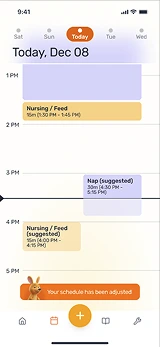
Your plan addresses what's happening now: teething, sitting up, separation anxiety starting. And when your baby shifts? Your plan shifts too. Life is unpredictable at 5 months. Your plan accounts for that.
Get Yourself Back
Only Sleep Plan that Stays With You
Sleep tools, expert guidance, and daily support - for your baby's sleep AND your recovery. When you're depleted, we adjust. When life's chaotic, we simplify. When you need us, we're here. Baby sleeps. You recover. That's the point.




4.8 based on 24,129 reviews
Relatable content
4.6
Practical application
4.5
Extra resources
4.8
Easy to use
4.7
Course variety
4.8
Thousands are getting their sleep back

We weren't sure if 5 months was too early, but the readiness assessment showed our daughter was ready. The gradual fading method took 2 weeks, but she now sleeps 10 hours with just one feed. Perfect gentle approach!
Our 5-month-old showed some signs but not all. Betteroo suggested foundation building first. We waited 3 more weeks, then sleep training was so easy! Glad we didn't rush when he wasn't ready.

The Pick-Up/Put-Down method was perfect for our sensitive 5-month-old. Yes, it took patience, but no harsh crying. She learned to self-soothe beautifully while still getting comfort when needed.

Every other resource said wait until 6 months, but our son was clearly ready at 5. The personalized plan worked with his development. He went from waking hourly to sleeping through with one dream feed!
No more...
Expensive sleep consultants
Forcing methods before baby's ready
Trial and error with generic advice
Feeling overwhelmed and alone
Missing the window when ready
Guilt about starting 'too early'
Join thousands of happy parents
24,129
Happy families
90%
See improvement in 1 week
4.8★
Average rating
Your 5-Month Sleep Training Questions, Answered
Five months is a unique age with lots of variability. Here's what you need to know about sleep training at this transitional stage.
Not necessarily, but it depends on your individual baby. Some 5-month-olds are developmentally ready - they show self-soothing behaviors, can go 4+ hours between feeds, and have predictable patterns. Others need a few more weeks. Look for readiness signs rather than focusing on age alone. If your baby isn't showing signs, building foundations now and waiting 2-4 weeks often leads to easier, faster success. There's no harm in waiting if uncertain.
Pick-Up/Put-Down is often gentlest for 5-month-olds. You respond to crying by picking up and soothing, then put baby down calm but awake. This teaches crib safety without distress. Gradual Fading also works well - slowly reduce your involvement over 2-3 weeks. Both methods respect that 5-month-olds still need reassurance while learning independence. Avoid harsh cry-it-out methods - most 5-month-olds aren't ready for no intervention.
Expect a longer timeline than with older babies. Most 5-month-olds show initial improvement in 5-7 nights, clearer progress by night 10-14, and solid success within 2-3 weeks. This is slower than 6-month-olds who often succeed in 3-7 nights. The gradual pace is normal - their nervous system is still maturing. Gentle methods take longer but create less stress. Stay consistent for at least 2 weeks before evaluating success.
Absolutely! Many 5-month-olds still need 1-2 night feeds, and that's fine. Sleep training means teaching independent sleep initiation, not night weaning. Feed when it's been 4+ hours and baby seems hungry. Keep feeds boring - low light, no talking, right back to crib awake. Put baby down awake after feeds using your sleep training method. Most babies naturally drop night feeds between 6-9 months once they master independent sleep.
New rolling skills can temporarily disrupt sleep, but don't necessarily mean waiting. If baby is getting stuck and crying, give them a few days to master rolling both ways. Practice extensively during the day. Once they can roll both ways (usually within a week), proceed with sleep training. The disruption is temporary - maintaining consistent responses helps them adjust faster. Some babies actually sleep better once they can get comfortable on their tummies.
If you see no improvement after 2 weeks of consistency, your baby might not be ready. This is normal - development varies widely at 5 months. Take a break and focus on foundations: consistent routines, drowsy but awake practice, and gradually reducing sleep associations. Reassess in 2-3 weeks. Most babies who struggle at 5 months succeed beautifully at 5.5-6 months when more mature. Early 'failure' often means easier success later.
Most 5-month-olds still need 3 naps, but some show signs of readiness for 2. Signs include: consistently fighting the third nap, bedtime pushing past 8 PM with 3 naps, or early morning wakings. If you see these signs, gradually extend wake windows and drop to 2 naps. If not, keep 3 naps - premature nap dropping can worsen night sleep. The transition typically happens between 5-7 months.
Yes, even gentle methods involve some protest crying. At 5 months, expect 10-30 minutes of on-and-off crying the first few nights with responsive methods. This isn't distressed crying - it's frustration at change. You're still responding and providing comfort, just differently. Crying typically decreases significantly by night 3-5. If crying is intense or prolonged (over 45 minutes with intervention), your baby might need a gentler approach or more time to mature.
Yes! Every baby can learn to sleep well with the right guidance. Betteroo creates a personalized sleep plan based on your baby's unique patterns, age, and temperament. Our approach combines proven sleep science with gentle, emotionally-attuned coaching that works with your parenting style, not against it. Thousands of parents have seen real improvements in as little as one week.
Many parents notice positive changes within the first 3-5 days, though every baby's timeline is unique. The key is consistency with your personalized plan. Betteroo adapts as you go, celebrating small wins and adjusting when needed. Remember, sustainable sleep changes take time, but with the right support, you'll get there together.
Betteroo goes beyond generic advice. We provide a truly personalized experience that adapts to your baby's sleep patterns in real-time, considers your parenting values, and offers emotional support for the tough moments. Plus, our expert-backed coaching feels like having a sleep consultant in your pocket, at a fraction of the cost.
Betteroo is designed to adapt to your baby's changing needs, whether it's a growth spurt, teething, or a developmental leap. Our Smart Sleep Schedule adjusts in real-time, and we provide specific guidance for common challenges like sleep regressions, travel, and illness. You're never navigating these tough phases alone.
Not at all! Betteroo offers flexible approaches that align with your comfort level, from gentle, gradual methods to more structured techniques. You choose what feels right for your family, and we guide you through it step by step. There's no one-size-fits-all approach because every family is unique.
Yes! Betteroo works with your current sleep setup and feeding method. Whether you're breastfeeding, formula feeding, or combination feeding, and whether your baby sleeps in a crib, bassinet, or safely co-sleeps, we create a plan that fits your family's lifestyle while helping you reach your sleep goals.
Betteroo is designed for babies from newborn through toddler years. Our personalized plans adapt to your child's developmental stage, whether you're navigating newborn sleep patterns, the 4-month regression, or transitioning to one nap. We grow with your family's needs.

Find Out If Your 5-Month-Old Is Ready
Get a personalized sleep plan that works with your baby's unique development. No rushing, no forcing.
4.8 based on 24,129 reviews