

Sleep Training Your 10 Month Old
10-month-olds learn new sleep patterns fast. Get a gentle plan and see calmer nights.
Your 10 month old's plan starts with you. Select your age:


Why 10 Months Is Prime Time
Your 10-month-old is ready to sleep through the night
At 10 months, separation anxiety peaks just as your baby masters cruising, standing and maybe first steps. Independence and clinginess collide at bedtime, and sleep is the first casualty. But 10-month-olds are also incredibly capable: they self-soothe, understand routines, and learn new patterns quickly. The development causing the chaos is the same development that ends it. Betteroo turns that into a gentle, personalized plan: separation anxiety handled with compassion, adjustments whenever teething or travel hits. Most families see calmer nights within two weeks, for about $1 a day, with a 30-day money-back guarantee.

Award-Winning Program

Proud Winner
Parents' Picks Awards 2026
Best Baby & Toddler Products
“Most parenting products are built around the baby. Betteroo was built for the parent.”

Proud Winner
Family Choice Awards 2026
Winner
“Recognized for putting the parent, not just the baby, at the center of sleep support.”

Proud Winner
Parents' Picks Awards 2026
Best Preschool Products
“Plans adapt in real time when life disrupts them, instead of expecting exhausted parents to comply with a static program.”
Proud Winner
Parents' Picks Awards 2026
Best Mom Products
“Betteroo isn't just helping babies sleep, it's helping parents feel seen.”
Backed by experts, Based on science, Loved by parents.

Based on research and data from these leading organizations
As Featured In




Sleep Training Your 10-Month-Old: Gentle, Responsive Strategies for Big Changes
Is sleep training safe for 10-month-olds?
Absolutely! Ten months is actually an excellent time for sleep training. Your baby has all the neurological development needed for independent sleep - mature circadian rhythm, self-soothing abilities, and understanding of routines. They can typically go all night without feeding (though some still have one feed). The key is using methods that respect the emotional challenges of this age, particularly separation anxiety which peaks between 8-10 months. Gentle, responsive methods work beautifully when applied consistently.
How do I handle separation anxiety during sleep training?
Separation anxiety peaks around 8-10 months and significantly impacts sleep. Your baby finally understands you exist when you leave - and they don't like it! Build confidence during the day with peek-a-boo games and short, positive separations. Extend bedtime routine to 20-30 minutes for extra connection time. Use a lovey or comfort object with your scent. Consider methods that allow presence initially (Chair Method) then gradually reduce. Maintain calm confidence - your emotions are contagious. Most importantly, consistent responses actually reduce anxiety by building trust that you'll return.
What sleep training methods work best at 10 months?
Several methods work well, depending on your comfort level and baby's temperament. Pick-Up/Put-Down provides maximum comfort - pick up when crying, put down when calm. The Chair Method keeps you visible while teaching independence over 1-2 weeks. Gradual Fading slowly reduces your involvement each night. Check and Console/Ferber uses timed check-ins for reassurance. The Wake-and-Sleep method involves slightly waking baby at bedtime, helping them practice falling asleep independently. For anxious babies, start with more presence. For babies who get stimulated by your presence, use less intervention.
Why does my 10-month-old keep standing in the crib?
Standing, cruising, and climbing are irresistible new skills at 10 months! During the day, provide extensive practice opportunities - the more they practice in daylight, the less compelling it is at night. At bedtime, lay them down once calmly, then don't engage further. Repeated laying down becomes an entertaining game. Stay boring and unresponsive to the midnight gymnastics. Most babies stop within 5-7 nights once the novelty wears off and they realize it doesn't get attention.
How long does sleep training take at 10 months? With consistency, 10-month-olds typically respond well to sleep training. Expect initial improvement within 3-5 nights, significant progress by night 7-10, and solid success within 2 weeks. Gentle methods may take slightly longer (2-3 weeks) but create less distress. Factors affecting timeline include consistency of approach, severity of sleep associations, temperament, and environmental factors. Remember, you're teaching a skill - some babies learn quickly, others need more practice. Stay consistent for at least 2 weeks before evaluating.
Can I sleep train during travel or life changes?
Life doesn't stop at 10 months! While ideal to start during a stable period, you can maintain sleep training through disruptions. For travel, bring familiar items (sleep sack, white noise, lovey) and maintain bedtime routine as much as possible. Accept some regression but return to consistency immediately upon returning home. For daycare start, implement training on weekends first, then coordinate with providers. During illness, provide comfort but try to maintain sleep location. Skills learned before disruptions return quickly with consistency.
Who we are
We're on a mission to help parents and babies sleep better.

Rachel Rothman
Renowned parenting expert who blends science, empathy and real-world experience as a mom of three


Dr. Magdalena M. Oledzka, PT, PhD, DPT, MBA, PCS, c/NDT
Board-Certified Clinical Specialist in Pediatric Physical Therapy with 25+ years of experience. Clinical Lead at the Hospital for Special Surgery Pediatric Rehabilitation and Young Athlete Center.

Dr. Meidad Greenberg, MD
Board-certified pediatrician and pediatric nephrologist. Fellowship-trained at Albert Einstein College of Medicine and Children’s Hospital at Montefiore. Award-winning medical educator and father of three.

Ellen Reisel
Developmental psychologist with decades of experience working with children and parents and multidisciplinary teams.

Jennifer Jaye, LCSW
For more than 15 years, Jennifer has helped children and families better understand developmental and sensory differences.

Marci Silver, MS, CCC-SLP
NY, CA and CT-certified speech-language and feeding pathologist. Trained in PROMPT, TalkTools, SOS feeding and myofunctional therapy, with clinical experience at the Hospital for Special Surgery.
How It Works
Take Quiz
Understand Your 10 Month Old's Sleep (and How You're Surviving)
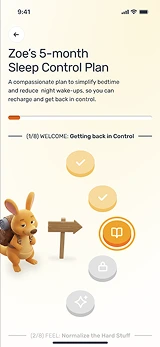
Our 3-minute quiz covers your baby's patterns AND how you're doing - then builds your plan based on both realities. Your baby's needs + your capacity = realistic solutions.
Get your custom plan
Get Personalized Plan
Custom Plan Built for You and Your Baby
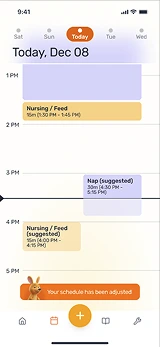
Your plan addresses what's happening now: standing, cruising, teething, nap transitions. And when your baby shifts? Your plan shifts too. Life is busy at 10 months. Your plan accounts for that.
Get Yourself Back
Only Sleep Plan that Stays With You
Sleep tools, expert guidance, and daily support - for your baby's sleep AND your recovery. When you're depleted, we adjust. When life's chaotic, we simplify. When you need us, we're here. Baby sleeps. You recover. That's the point.


4.8 based on 24,129 reviews
Relatable content
4.6
Practical application
4.5
Extra resources
4.8
Easy to use
4.7
Course variety
4.8
Thousands are getting their sleep back
Our 10-month-old's separation anxiety was destroying bedtime. The Chair Method Betteroo recommended was perfect - we stayed close while she learned independence. Two weeks later, she goes down happily and sleeps 11 hours!
The standing-in-crib phase was driving us crazy! The personalized plan helped us stay boring at night while tiring him out during the day. Within a week, he stopped the midnight acrobatics and started sleeping through.
We thought 10 months was too late to start, but Betteroo showed us it was perfect timing. Our daughter responded so well to the gradual fading method. From 5 wakings to sleeping through in just 10 days!

Travel and daycare starting derailed everything. The plan helped us stay consistent despite disruptions. Our 10-month-old now sleeps beautifully at home and daycare. The milestone guidance was invaluable!
No more...
Expensive sleep consultants
Separation anxiety bedtime battles
Endless sleepless nights
Feeling like it's too late
Trial and error with generic advice
Feeling overwhelmed and alone
Sleep disrupted by every milestone
Join thousands of happy parents
24,129
Happy families
90%
See improvement in 1 week
4.8★
Average rating
Your 10-Month Sleep Training Questions, Answered
Ten months brings unique opportunities and challenges. Here are evidence-based answers about sleep training at this active age.
Not at all! Ten months is actually an excellent time to sleep train. Your baby has all the neurological development needed for success, mature circadian rhythm, self-soothing abilities, and cognitive understanding of routines. While habits may be more entrenched than in younger babies, 10-month-olds also understand patterns better and can learn quickly with consistency. Many families find success is actually faster at 10 months than earlier ages because babies are developmentally ready.
Many parents notice positive changes within the first 3-5 days, though every baby's timeline is unique. The key is consistency with your personalized plan. Betteroo adapts as you go, celebrating small wins and adjusting when needed. Remember, sustainable sleep changes take time, but with the right support, you'll get there together.
Separation anxiety peaks between 8-10 months but doesn't prevent sleep training, it just requires a thoughtful approach. During the day, practice short separations with happy reunions. At bedtime, extend your routine to 20-30 minutes for connection. Use a consistent phrase like 'Mommy always comes back.' Start with methods allowing more presence (Chair Method) if anxiety is severe. Your calm confidence is crucial, if you're anxious about leaving, baby will be too. Most see improvement within 1-2 weeks despite ongoing separation anxiety.
This is incredibly common at 10 months! Your baby has mastered standing and can't resist practicing. During the day, practice 'up and down' games constantly. At bedtime, lay them down once calmly, then become boring. Don't repeatedly lay them down - this becomes entertainment. Stay silent and unresponsive to the standing. Most babies learn to lie themselves down within 5-7 nights once they realize standing doesn't achieve anything. The phase passes quickly with a boring response.
For sensitive babies with strong separation anxiety, gradual methods work best. The Chair Method lets you stay present while slowly increasing distance over 2 weeks. Pick-Up/Put-Down provides comfort without creating dependencies. Gradual Fading slowly reduces your involvement. These take longer (2-3 weeks) but minimize distress. For less sensitive babies who get stimulated by your presence, Check and Console or even extinction may work better and faster (3-7 nights).
Yes, though timing matters. Ideally, start sleep training 2-3 weeks before or after daycare begins to avoid too many changes at once. If already in transition, focus on weekends and nights first. Share your sleep goals with daycare providers - many will support your approach. Maintain consistent bedtime routines even if naps are different at daycare. Most babies learn to differentiate between home and daycare sleep. Skills learned at home often improve daycare sleep too.
Travel at 10 months doesn't have to derail sleep training. Bring familiar items - sleep sack, white noise machine, lovey. Maintain your bedtime routine even in new environments. Try to keep sleep space as similar as possible (travel crib vs bed-sharing if that's not normal). Accept some regression as normal. Return to full consistency immediately upon returning home. Most babies return to good sleep within 2-3 nights back home if you stay consistent. Consider starting sleep training at least 2 weeks before travel for best results.
The '10-month regression' is real but often related to development rather than true sleep regression. Major causes include: peak separation anxiety, mastering standing/cruising/walking, cognitive leaps in understanding, potential nap transition (some drop to 1 nap early), and increased environmental awareness. This isn't regression - it's progression! Maintain consistency while being patient with harder nights. Most developmental disruptions pass within 1-2 weeks if you don't create new sleep associations.
Most 10-month-olds can sleep 11-12 hours without feeding, but some still have one night feed, especially if breastfed. If your baby is growing well, night feeds are likely habit rather than hunger. To night wean, gradually reduce feeding time/amount, or go cold turkey if preferred. Ensure adequate daytime calories first. If keeping one feed, make it boring and put baby back awake. Many naturally drop the last feed once they master independent sleep skills.
Yes! Every baby can learn to sleep well with the right guidance. Betteroo creates a personalized sleep plan based on your baby's unique patterns, age, and temperament. Our approach combines proven sleep science with gentle, emotionally-attuned coaching that works with your parenting style, not against it. Thousands of parents have seen real improvements in as little as one week.
Betteroo goes beyond generic advice. We provide a truly personalized experience that adapts to your baby's sleep patterns in real-time, considers your parenting values, and offers emotional support for the tough moments. Plus, our expert-backed coaching feels like having a sleep consultant in your pocket, at a fraction of the cost.
Betteroo is designed to adapt to your baby's changing needs, whether it's a growth spurt, teething, or a developmental leap. Our Smart Sleep Schedule adjusts in real-time, and we provide specific guidance for common challenges like sleep regressions, travel, and illness. You're never navigating these tough phases alone.
Not at all! Betteroo offers flexible approaches that align with your comfort level, from gentle, gradual methods to more structured techniques. You choose what feels right for your family, and we guide you through it step by step. There's no one-size-fits-all approach because every family is unique.
Yes! Betteroo works with your current sleep setup and feeding method. Whether you're breastfeeding, formula feeding, or combination feeding, and whether your baby sleeps in a crib, bassinet, or safely co-sleeps, we create a plan that fits your family's lifestyle while helping you reach your sleep goals.
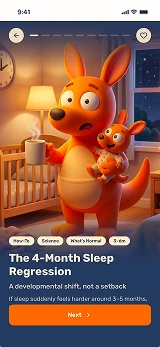
Betteroo is designed for babies from newborn through toddler years. Our personalized plans adapt to your child's developmental stage, whether you're navigating newborn sleep patterns, the 4-month regression, or transitioning to one nap. We grow with your family's needs.
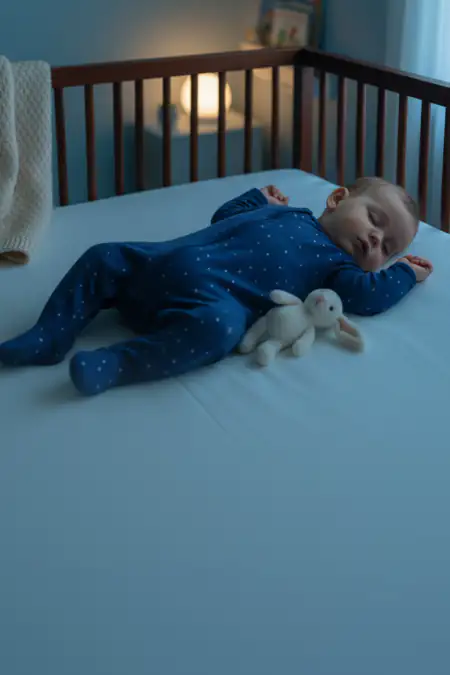
Ready to sleep through the night?
Get a plan for separation anxiety, endless energy and new skills. $1 a day, with a 30-day guarantee. Start tonight.
4.8 based on 24,129 reviews