

Considering the Ferber Method? Here's What You Need to Know.
Ferber works for some families. But it's not your only option. Get a plan that matches your baby AND your comfort level.
Based on your age


Why Parents Search "Ferber"
You're exhausted. You need a plan. And you've heard Ferber works.
You're not here because you love the idea of your baby crying. You're here because you're desperate for sleep, you've tried the gentle stuff, and Ferber is the method everyone talks about. Here's what the research actually says: graduated extinction (Ferber) is effective. Studies show most babies improve within 3-7 days. Long-term follow-ups found no harm to attachment or emotional development. But here's what the research also shows: Ferber isn't the only evidence-based option. Gentler methods work too, they just take longer. And for some babies, check-ins actually make crying worse. The right method isn't about what's "best." It's about what you can do consistently, what fits your baby's temperament, and what lets you sleep without guilt eating you alive. Betteroo helps you find that match.

Award-Winning Program

Proud Winner
Parents' Picks Awards 2026
Best Baby & Toddler Products
“Most parenting products are built around the baby. Betteroo was built for the parent.”

Proud Winner
Family Choice Awards 2026
Winner
“Recognized for putting the parent, not just the baby, at the center of sleep support.”

Proud Winner
Parents' Picks Awards 2026
Best Preschool Products
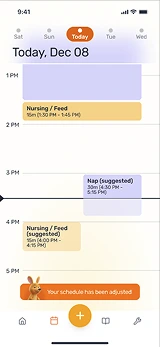
“Plans adapt in real time when life disrupts them, instead of expecting exhausted parents to comply with a static program.”
Proud Winner
Parents' Picks Awards 2026
Best Mom Products
“Betteroo isn't just helping babies sleep, it's helping parents feel seen.”
Backed by experts, Based on science, Loved by parents.

Based on research and data from these leading organizations
As Featured In




The Science: Does Ferber Actually Work?
Yes - for most families. Here's what the research shows:
Ferber (graduated extinction) typically produces results in 3-7 nights. A landmark 5-year follow-up study found no differences in attachment, behavior, or emotional health between sleep-trained and non-sleep-trained children.
But effectiveness depends on fit. Some babies escalate with timed check-ins, they cry harder when you appear and leave. Others do better with more parental presence (chair method) or less (full extinction).
The key factors for success aren't which method you choose. They're: realistic schedules, developmental readiness, consistency, and choosing an approach you can actually stick with when it gets hard.
That's why Betteroo doesn't push one method. We assess your baby's sleep patterns, your comfort level with crying, and your family's situation, then build a plan you can follow through on.
Who we are
We're on a mission to help parents and babies sleep better.

Rachel Rothman
Renowned parenting expert who blends science, empathy and real-world experience as a mom of three


Dr. Magdalena M. Oledzka, PT, PhD, DPT, MBA, PCS, c/NDT
Board-Certified Clinical Specialist in Pediatric Physical Therapy with 25+ years of experience. Clinical Lead at the Hospital for Special Surgery Pediatric Rehabilitation and Young Athlete Center.

Dr. Meidad Greenberg, MD
Board-certified pediatrician and pediatric nephrologist. Fellowship-trained at Albert Einstein College of Medicine and Children’s Hospital at Montefiore. Award-winning medical educator and father of three.

Ellen Reisel
Developmental psychologist with decades of experience working with children and parents and multidisciplinary teams.

Jennifer Jaye, LCSW
For more than 15 years, Jennifer has helped children and families better understand developmental and sensory differences.

Marci Silver, MS, CCC-SLP
NY, CA and CT-certified speech-language and feeding pathologist. Trained in PROMPT, TalkTools, SOS feeding and myofunctional therapy, with clinical experience at the Hospital for Special Surgery.
How It Works
Take Quiz
Tell Us About Your Baby (And How You're Holding Up)
Our 3-minute assessment covers your baby's age, sleep patterns, and temperament - plus YOUR comfort level with crying and what you've already tried. No judgment, just information.
Get your custom plan
Get Personalized Plan
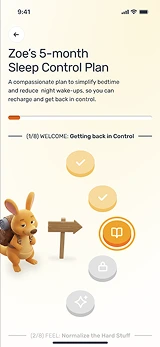
Get a Plan That Matches Your Comfort Level
Whether you want Ferber-style structure, gentler gradual methods, or something in between - your plan is built for YOUR family. Clear steps, realistic timelines, and guidance for when things go off-script.
Get Yourself Back
Everything you need for sleep success
In-app tools and an extensive expertly curated content pieces from pediatricians, sleep and mindfulness experts, ensure you have everything you need to reach sleep success.



4.8 based on 24,129 reviews
Relatable content
4.6
Practical application
4.5
Extra resources
4.8
Easy to use
4.7
Course variety
4.8
Thousands are getting their sleep back

I was ready to start Ferber but terrified of the crying. Betteroo helped me understand my options and gave me a plan I could actually stick with. My daughter was sleeping through the night in 10 days, with way less crying than I expected.
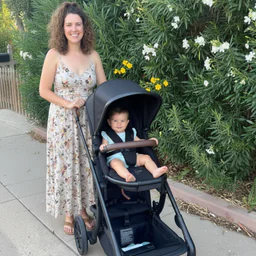
We tried Ferber on our own and quit after night 2. The crying was unbearable. Betteroo showed us our wake windows were completely wrong - and gave us a gentler approach that actually worked. Wish we'd started here.

I'd read everything about Ferber and still felt confused. Betteroo broke it down and helped me see it wasn't the right fit for my son - he escalated with check-ins. The alternative method they suggested worked in a week.

The guilt was eating me alive. Betteroo helped me understand that wanting sleep doesn't make me a bad mom - and that there are real options between "suffer forever" and "let him scream." We found our middle ground.
No more...
Endless sleepless nights
3am guilt spirals
"Am I ruining my baby?"
Conflicting advice everywhere
Expensive sleep consultants
Parents who wanted structure AND compassion are sleeping again
24,129
Happy families
90%
See improvement in 1 week
4.8★
Average rating
Your Questions About Ferber, Answered Honestly
We know you've been Googling. Here's what you actually need to know - no judgment, no agenda.
The Ferber method (graduated extinction) means putting your baby down drowsy but awake, then checking at increasing intervals (typically 3, 5, 10 minutes) with brief reassurance, no picking up. The intervals increase each night. Most families see improvement in 3-7 days. It's different from full extinction (no checks) and gentler methods (more parental presence).
Research says no. Multiple studies, including a 5-year follow-up, found no differences in attachment, emotional health, or behavior between sleep-trained and non-sleep-trained children. The AAP considers behavioral sleep interventions safe for healthy infants over 4-6 months. That said, it's not right for every baby or every parent, and that's okay too.
Common reasons: baby temperament (some escalate with check-ins), inconsistency (stopping partway teaches baby to cry longer), bad timing (illness, travel, developmental leaps), underlying issues (reflux, hunger, overtiredness), or parents who can't emotionally tolerate the crying. Failure isn't weakness, it's mismatch.
Not exactly. Ferber includes timed check-ins with brief reassurance. Full extinction (CIO) means no checks until morning or a scheduled feed. Some parents find Ferber's check-ins helpful; others find they make crying worse. Both work, the question is which fits your baby and your tolerance.
That's not a character flaw - it's biology. Many parents describe a visceral, physical need to respond. If Ferber feels wrong in your body, gentler methods exist: chair method, pick-up/put-down, gradual withdrawal. They take longer but involve less crying. The best method is one you can do consistently.
Good candidates: babies 4-6+ months, healthy, no underlying medical issues, parents who can commit to consistency for at least a week. Poor candidates: babies who escalate dramatically with check-ins, parents with trauma around crying, families in unstable situations. Betteroo's assessment helps identify fit.
Ferber: leave room, return at intervals, brief check, leave again. Gentler methods (chair, camping out, pick-up/put-down): parent stays in room longer, more soothing allowed, slower withdrawal. Ferber is typically faster (days) but involves more crying. Gentler methods take longer (weeks) but feel more tolerable for many parents.
No. We don't push any single method. Your plan is based on your baby's age, temperament, and sleep patterns, plus YOUR comfort level with crying and what you've already tried. Some families get Ferber-style plans. Others get gentler approaches. Most get something in between.
That doesn't mean you failed - it means something wasn't aligned. - Maybe the schedule was off (overtired babies struggle more). - Maybe check-ins made your baby worse. - Maybe you needed more support on night 2. Betteroo troubleshoots what went wrong and builds a better-fit plan.
Completely normal. Most parents searching "Ferber" are holding two beliefs at once: "I desperately need sleep" and "letting my baby cry feels wrong." That conflict is exhausting. Here's what we know: wanting sleep doesn't make you a bad parent. Choosing a structured approach doesn't mean you love your baby less. And guilt isn't a useful compass for sleep decisions.
We're not method-loyal. TCB and Huckleberry have great content, but they each lean toward specific approaches. Betteroo assesses YOUR situation and builds a plan from a full toolkit, Ferber-style, gentle, or hybrid, based on what actually fits your family. Plus ongoing support when things go sideways.
Extremely common. One parent is often more ready for structured crying; the other wants gentler options. Betteroo can help you find middle ground, a plan both of you can commit to. Consistency matters more than method, so alignment is critical.
Most experts recommend 4-6 months minimum for healthy, full-term babies. Earlier than that, babies aren't developmentally ready for self-soothing. Some families wait until 6-9 months. There's no "perfect" window, but starting during peak separation anxiety (8-10 months) can be harder.
With Ferber-style methods, most families see significant improvement in 3-7 nights. Gentler methods typically take 2-4 weeks. We set realistic expectations in your plan and help you troubleshoot if progress stalls.
Start with our 3-minute assessment, we ask about your baby's sleep, your comfort level with crying, and what you've tried. You get a personalized plan with clear steps, timelines, and scripts for when things go off-track. Plus 24/7 support through the hard nights. Most families see improvement within 2 weeks.

Ready for a plan that actually fits?
Ferber isn't your only option. Get a personalized sleep plan based on your baby's needs AND your comfort level.
4.8 based on 24,129 reviews